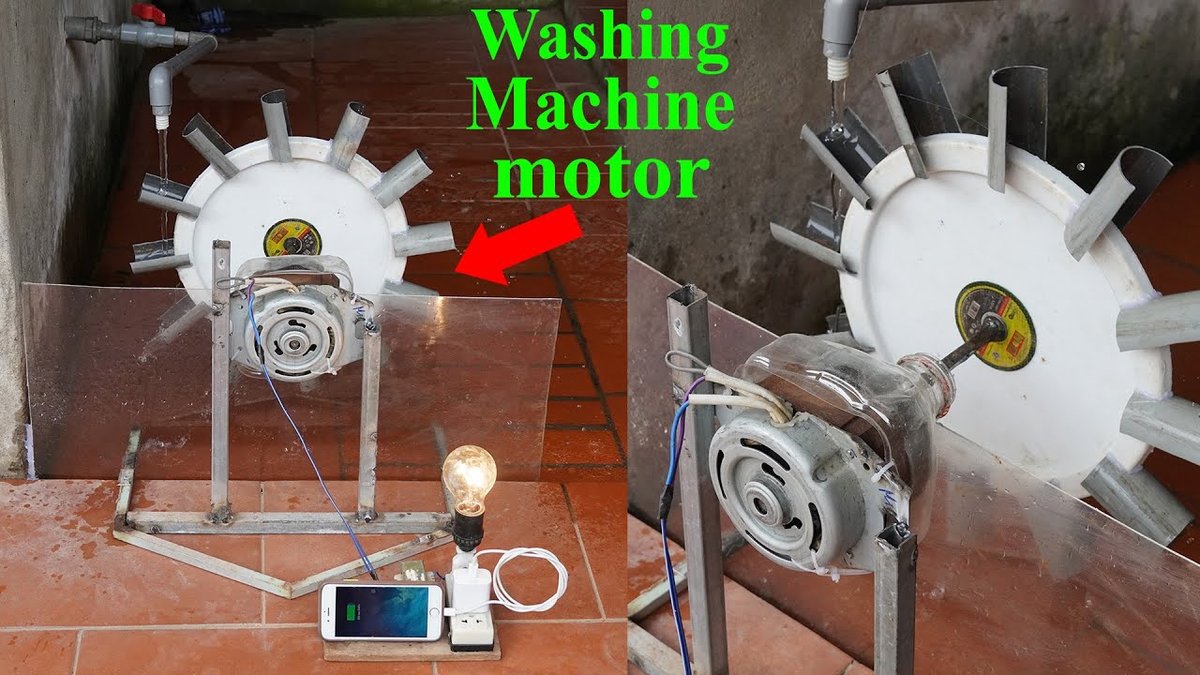
Imagine a constant, reliable source of electricity flowing right through your property, silently powering your home or farm with clean, renewable energy. This isn't a futuristic fantasy; it's the tangible promise of Micro-Hydro Power Generation. For those with access to flowing water – a stream, river, or even a robust spring – micro-hydro systems offer a uniquely continuous and sustainable way to achieve true energy independence, reducing reliance on the grid and shrinking your carbon footprint.
Unlike solar panels or wind turbines, which depend on intermittent sunlight or breezes, micro-hydro systems harness the kinetic energy of moving water, which often flows 24/7. This consistency makes it an incredibly attractive option for anyone seeking reliable, year-round power. Typically, these systems generate less than 100 kilowatts (kW) of electricity, making them perfectly scaled for residential, agricultural, or small community needs.
At a Glance: Your Quick Guide to Micro-Hydro Power
- What it is: Converts flowing water's energy into electricity using a turbine and generator.
- Sustainability: A continuous, renewable, and non-consumptive energy source.
- Scale: Ideal for homes, farms, and small communities, typically under 100 kW.
- Key Factors: Hydropower potential hinges on your site's flow rate (quantity of water) and head (vertical drop).
- Core Components: Involves water conveyance (penstock), a turbine, a generator, and electrical infrastructure.
- Cost & Savings: High initial investment, but low long-term operating costs and "free" energy for decades.
- DIY Potential: Achievable with careful planning, though professional guidance is often recommended for safety and efficiency.
Why Micro-Hydro? Unlocking Nature's Consistent Power
At its heart, a micro-hydro system is an elegant engine of sustainability. It taps into the power of a natural phenomenon – water moving downhill – and transforms it into usable electricity. Think of it: the same water that nurtures your land, sustains local wildlife, and carves the landscape can also run your lights, power your appliances, and charge your electric vehicle.
The process is remarkably straightforward: water is diverted from a stream, channeled through a pipe, spins a turbine, which then drives a generator, creating electricity. This electricity can then power your property directly, charge batteries for later use, or even be fed back into the main electrical grid if you have a grid-tied system. The water, having done its work, is then returned to its source, downstream, ensuring that it is a truly non-consumptive use of this vital resource.
The Anatomy of a Micro-Hydro System: From Stream to Socket
Understanding the basic components is the first step in appreciating the ingenuity and potential of micro-hydro. Each part plays a critical role in efficiently converting water's power into electricity.
- Water Conveyance: This initial stage manages the water flow.
- Trash Rack: A simple screen at the intake to prevent debris (leaves, branches, fish) from entering the system.
- Weir: A small dam or barrier that raises the water level slightly, directing it into the intake.
- Forebay: A small, calm pool just before the penstock that allows sediment to settle and provides a final screening point.
- Penstock: The crucial pipeline that delivers water from the intake to the turbine. It's designed to maintain pressure and velocity.
- Powerhouse: This compact structure houses the heart of your generation system.
- Turbine: The primary mechanical component that converts the water's kinetic and/or pressure energy into rotational motion.
- Generator: Driven by the turbine, it converts mechanical energy into electrical energy.
- Electronics: Includes controllers, inverters, and safety equipment to manage the electricity.
- Water Turbine: As mentioned, this is where the magic happens, turning water's force into mechanical spin. We’ll delve deeper into turbine types shortly.
- Tailrace: Once the water has passed through the turbine and expended its energy, it's released back into the stream or river via a tailrace, which is essentially a short, open channel.
- Transmission Lines: These are the wires that carry the generated electricity from the powerhouse to your home, farm, or the utility grid.
Measuring Your Site's Hydropower Potential: The Critical First Steps
Before you even think about buying equipment, you need to understand your site's specific hydropower potential. This involves accurately measuring two fundamental factors: flow rate and head. These measurements are non-negotiable and dictate the size and type of system you can install.
1. Flow Rate (Q): How Much Water Do You Have?
The flow rate is the quantity of water moving past a specific point per unit of time, typically measured in gallons per minute (gpm) or cubic feet per minute (cfm). For micro-hydro, the trick is to determine the minimum continuous flow – the lowest flow your stream experiences, usually during the driest season. Measuring monthly for a full year is ideal, or at least during the driest period, and cross-referencing with historical U.S. Geological Survey (USGS) data.
Here are reliable methods for measuring flow rate:
- The Bucket Method: Simple and effective for smaller streams.
- Dam the stream with a temporary barrier, directing all water into a pipe or channel.
- Place a known-volume container (like a 5-gallon bucket or 55-gallon drum) under the outlet.
- Time how long it takes to fill the container.
- Calculate:
Volume (gallons) / Time (seconds) * 60 = GPM.
- Example: If a 55-gallon drum fills in 40 seconds, that's 82.5 gpm (55/40 * 60) or roughly 11 cfm.
- The Float Method: For larger streams where the bucket method isn't practical.
- Measure a straight, uniform section of the stream (e.g., 50-100 feet).
- Calculate the average cross-sectional area of this section (width x average depth).
- Drop a floating object (e.g., an orange) upstream and time how long it takes to travel the measured distance. This gives you surface velocity.
- Multiply the surface velocity by a "streambed roughness correction factor" (0.25 for very rough, 0.75 for smooth) to get average stream velocity.
- Calculate:
Cross-sectional Area (sq ft) x Average Velocity (ft/min) = CFM.
- Example: A stream section is 2 ft wide and averages 4.8 ft deep (area = 9.6 sq ft). A float travels 78 feet in 1 minute. With a correction factor of 0.75, average velocity is 58.5 ft/min. Flow = 9.6 sq ft * 58.5 ft/min = 561.6 cfm.
- The Weir Method: The most accurate for varying stream sizes, but requires construction.
- Build a temporary, watertight dam across the stream with a precisely cut rectangular notch (a "weir").
- Measure the depth of the water flowing over the weir using a depth gauge placed upstream (at least 3-4 times the weir's width away) to avoid turbulence.
- Use a "Weir Table" (standard engineering charts) to convert the depth measurement into an accurate flow rate.
The "usable flow" is the portion of the streamflow you can realistically designate for power generation, balancing your needs with environmental considerations. For more insights on managing water resources sustainably, you might want to explore sustainable water management practices.
2. Head (h): The Vertical Drop
Head refers to the vertical drop in feet from your water intake point to where the water leaves the turbine. This vertical distance creates the pressure needed to drive the turbine.
- Gross Head: The total vertical drop from intake to the turbine's outflow.
- Net Head: The gross head minus any head losses due to friction in the penstock, bends, valves, and other components. This is the effective head that actually drives your turbine.
Accurate measurement is vital: - Graduated Pressure Gauge: Attach a pressure gauge at the proposed turbine location (before the turbine, but after the penstock). The static pressure (when water is flowing but the turbine isn't spinning, or if you block the flow) can be converted to feet of head:
PSI x 2.31 = Feet of Head. - Example: A reading of 50 psi equals 115.5 feet of head (50 x 2.31).
- Surveyor's Transit/Leveling Method: This is the most precise method, involving a transit or level and a surveying rod to measure vertical segments along the proposed penstock route.
- Preliminary Estimates: While topographical maps, altimeters, and GPS can give you a rough idea, they are not accurate enough for final system design. Use them only for initial site assessment.
Calculating Power: From Theoretical to Usable Electricity
Once you have your usable flow rate and net head, you can begin to calculate the power your micro-hydro system could generate.
1. Theoretical Power Available (Pth)
This calculation assumes 100% efficiency, which isn't achievable in a real-world system but provides a useful baseline.
- In Horsepower (HP):
Pth = (Usable Flow (cfm) x Net Head (feet)) / 529 - In Kilowatts (kW):
Pth = (Usable Flow (cfm) x Net Head (feet)) / 709 - Example: If your usable flow is 5 cfm and your net head is 100 feet:
Pth (kW) = (5 cfm x 100 feet) / 709 = 500 / 709 = 0.705 kW
This means theoretically, your site could generate about 705 watts of continuous power.
2. Useful Power (P): Accounting for Real-World Efficiencies
The theoretical power needs to be adjusted for the inefficiencies inherent in any mechanical and electrical system. Each component loses a small percentage of energy during conversion.
- Turbine Efficiency: Typically ranges from 70% to 85%.
- Belt Drive Efficiency (if used): Around 95% to 97%.
- Alternator/Generator Efficiency: Approximately 80%.
To find your Useful Power, you'll multiply the Theoretical Power by the efficiency of each component. The "water-to-wire" efficiency factor encompasses all these losses and typically ranges from 50% to 70% for a well-designed micro-hydro system.
So, for our example (0.705 kW Pth), with an overall water-to-wire efficiency of, say, 60%:Useful Power (P) = 0.705 kW x 0.60 = 0.423 kW
This means your system could realistically generate about 423 watts continuously. Over 24 hours, this would amount to approximately 10.15 kWh per day (0.423 kW * 24 hours). Knowing your expected daily power generation is crucial for sizing your system and understanding how it can meet your home's needs.
Choosing Your Turbine: Impulse vs. Reaction & Beyond
The turbine is the heart of your micro-hydro system, and selecting the right type is critical for efficiency and longevity. The choice largely depends on your specific site's head and flow characteristics.
Impulse Turbines: Harnessing Velocity
Impulse turbines use the velocity of a high-pressure jet of water to spin the runner (the rotating part). They are generally simpler, robust, and common for high-head, low-flow micro-hydro sites.
- Pelton Wheel: The quintessential impulse turbine. A jet of water strikes a series of double-cupped buckets mounted around the wheel's perimeter. Highly efficient for very high heads and relatively low flows.
- Turgo Wheel: A variation of the Pelton, designed for slightly lower heads but higher flows. The jet strikes the buckets at an angle, allowing water to exit more quickly, leading to higher rotational speeds with a smaller wheel. It's often suitable for medium to high heads.
- Crossflow Turbine (Banki-Michell): A drum-shaped turbine where water flows through the blades twice – entering from the outside, crossing the center, and exiting from the inside. They are robust, self-cleaning, and perform well with low to medium heads and varying flows.
- Jack Rabbit Turbine: A niche, ultra-low-head design for sites with very little head (as little as 13 inches) but potentially decent flow. These typically produce very low power, up to 100 Watts, and are ideal for minimal power needs.
Reaction Turbines: Utilizing Pressure
Reaction turbines are designed so that the runner blades are always fully immersed in the water, converting both the pressure and kinetic energy of the water. They are typically more complex and costly for micro-hydro scales, but highly efficient for specific conditions.
- Propeller Turbines (e.g., Kaplan): These resemble a boat propeller and are highly efficient for high-flow, very low-head applications. Kaplan turbines feature adjustable blades, which allows them to maintain high efficiency across a wide range of flow variations, though this adds complexity.
Pump-as-Turbine (PAT): An Economical Alternative
Centrifugal pumps, when run in reverse, can act as turbines. This "pump-as-turbine" approach offers an inexpensive and readily available option, particularly appealing for DIY enthusiasts. However, there are trade-offs:
- Efficiency: Generally less efficient than purpose-built turbines.
- Durability: Pumps are not designed for continuous turbine operation and may be more prone to wear and damage.
- Site Specificity: They perform best with constant head and flow, as their efficiency drops significantly with variations.
Waterwheels: The Ancestral Method
While iconic and historically significant, waterwheels (like undershot or overshot wheels) are generally not practical for modern electricity generation. Their slow rotational speed and bulk make them inefficient compared to modern turbines for producing useful amounts of electricity.
Designing Your System: Sizing, Components, and Smart Choices
Once you know your site's potential and have a turbine type in mind, it's time to design the rest of your system. This involves careful planning to ensure your system meets your energy needs efficiently and reliably.
System Sizing: Matching Supply to Demand
Start by determining your total daily energy consumption (in kilowatt-hours, kWh) and your peak instantaneous power demand (maximum Watts you might use at any one time). This information dictates the required generating capacity and battery storage (if off-grid).
Actionable Insight: Saving energy is almost always cheaper and more effective than building a larger micro-hydro system. Before sizing your system, perform a thorough home energy audit to identify areas for reducing consumption. Upgrading to LED lighting, energy-efficient appliances, and improving insulation can significantly reduce your power needs.
Penstock (Piping): The Water Highway
The penstock is a critical, often costly, component. Material choice and proper installation are paramount.
- Materials: Common choices include PVC, black polyethylene (PE), and high-density polyethylene (HDPE). HDPE is generally preferred for its durability and flexibility.
- Pressure Rating: Actionable Insight: Always choose piping with a pressure rating at least 40% higher than your maximum static water pressure (the pressure when water is not flowing). This buffer protects against pressure surges and water hammer.
- Routing:
- Route pipes as straight as possible.
- Avoid sharp turns (no 45-degree or greater elbows) as they cause significant head loss and increase turbulence.
- Maintain a continuous downhill slope to prevent air locks, which can reduce flow and damage pipes.
- Valves: Use only gate valves for controlling flow in the penstock. Ball valves or globe valves are too restrictive. Actionable Insight: Always open and close gate valves slowly to prevent "water hammer" – a sudden pressure surge that can severely damage pipes and equipment.
Power Generation & Storage: Off-Grid or Grid-Tied?
Your electrical system will depend on whether you're disconnecting from the grid or complementing it.
- Off-Grid Systems: These systems generate their own power and are independent of utility companies.
- Synchronous Generators: Used with governors to maintain a constant AC frequency (e.g., 60 Hz in North America).
- Battery Banks: Store excess DC power for use during periods of high demand or when flow is insufficient. While excellent for extending peak capacity, they become bulky and costly for larger energy storage needs.
- Inverters: Convert the DC power from batteries or rectifiers into usable AC power for your appliances.
- Charge Controllers: Prevent battery overcharging and optimize battery health.
- Load Control & Dump Loads: Essential for managing excess energy. When demand is low, a load controller diverts surplus electricity to "dump loads" – typically resistive heaters (water heaters, space heaters) – preventing the turbine from over-speeding and wasting energy. This ensures a stable output frequency. For a deeper dive into living off the grid, consider exploring off-grid living solutions.
- Grid-Tied Systems: These systems operate in parallel with the utility grid.
- Asynchronous Generators (Induction Generators): Can be self-regulating and are often simpler for grid-tied applications, synchronizing with the grid's frequency.
- Net Metering: Allows you to sell excess electricity back to the utility, potentially offsetting your electricity bill.
- Interconnection Agreements: Required with your utility company.
The Economics of Going Micro-Hydro: Investment vs. Long-Term Savings
Micro-hydro systems represent a significant upfront investment, but they offer substantial long-term financial benefits, especially when compared to the ongoing cost of utility power or the expense of extending power lines to remote locations.
- Initial Investment: Costs can range from $1,500 to $4,000 per kilowatt (kW) for DIY systems. Smaller systems often have a higher cost per kW due to fixed component costs.
- Maintenance: Generally low, averaging around 5% of the initial capital cost annually. With proper care, a micro-hydro system can provide "free" energy for 20-25 years, often much longer.
- Site Characteristics: High-head, low-flow systems tend to be cheaper because they require smaller penstocks and turbines, reducing material and installation costs.
- Remote Locations: Actionable Insight: For properties far from the existing electrical grid, the economics of micro-hydro dramatically improve. Extending power lines can cost anywhere from $10,000 to $30,000 per mile, making a self-sufficient micro-hydro system a financially attractive alternative.
Financial Assistance and Incentives
Various programs and incentives can help offset the initial investment:
- Database of State Incentives for Renewables and Efficiency (DSIRE): A comprehensive resource for state, local, federal, and utility incentives.
- Rural Energy for America Program (REAP): Administered by the USDA, REAP offers grants ($2,500-$500,000) and loan guarantees ($5,000-$25 million) to agricultural producers and rural small businesses for renewable energy projects up to 30 MW.
- Renewable Electricity Production Tax Credit (PTC): A federal tax credit providing 1.1 cents per kilowatt-hour for incorporated businesses that sell electricity to utilities. Be sure to explore available tax credits and grants in your area, as these can significantly impact your project's feasibility.
Navigating Regulations and Environmental Stewardship
Installing a micro-hydro system means interacting with both the natural environment and regulatory bodies. Responsible planning ensures your project is legal and environmentally sound.
Actionable Insight: Engage with local, state, and federal agencies early in your planning process. This includes your local planning department, state environmental agencies (e.g., those governing water rights), state dam safety officials (if applicable), and potentially federal bodies. Addressing potential concerns upfront can save immense time and money.
Federal Energy Regulatory Commission (FERC)
FERC regulates most hydropower projects in the U.S. However, many micro-hydro projects (under 5 MW) can qualify for exemptions, especially those using existing conduits or "run-of-the-river" designs. Obtaining an exemption typically takes 6-12 months. Operating without the necessary permits carries significant legal risks. During the permitting process, emphasize that micro-hydro is a "non-consumptive use" – 100% of the water diverted is returned to the stream.
Environmental Impact
While micro-hydro has a much smaller environmental footprint than large dams, it's not without potential impacts. Thoughtful design can minimize these:
- Water Quality: Ensure your intake screens don't excessively filter beneficial organic matter.
- Streamflow Diversion: While water is returned, the diversion itself can affect the stream section between intake and tailrace.
- Wildlife and Fish Migration: Proper screening at the intake is crucial to prevent aquatic life from entering the penstock. Fish ladders or other bypass structures might be required depending on local regulations and fish species.
- Stream Ecology: Maintaining adequate "in-stream flow" – the minimum water level required to sustain the natural ecosystem – is vital.
Actionable Insight: Design "run-of-the-river" systems whenever possible. These systems divert only a portion of the flow, with no significant storage, and ensure the diverted water is returned quickly. This minimizes changes to natural streamflow patterns and impacts on aquatic life. Work with environmental experts to incorporate measures that protect local flora and fauna.
DIY Micro-Hydro: Essential Cautions and Best Practices
Building a micro-hydro system can be a rewarding DIY project, but it combines elements of electrical, high-pressure plumbing, and heavy construction. Extreme caution and adherence to best practices are paramount.
During Design: Precision is Key
- Streambed Loading: Account for the weight of your penstock (especially if buried or supported by structures) and the water it contains. Ensure the streambed or supporting terrain can handle the load.
- Penstock Sizing: Aim for a water velocity of around 5 feet per second within the penstock. This balances frictional losses with avoiding sedimentation and ice buildup (lower velocities in cold climates can freeze more easily).
- Minimize Bends: As mentioned earlier, every bend causes head loss. Plan your penstock route to be as straight as possible.
- Continuous Downhill Slope: Crucial to prevent air pockets that can block flow or cause surging.
- Water Bypass: Install a bypass mechanism at your intake to allow water to flow freely down the original stream channel when the system is shut down for maintenance or in emergencies.
For Equipment: Quality Matters
- Reputable Suppliers: Always deal with established, reputable micro-hydro equipment suppliers. Cheap, off-brand components can lead to costly failures.
- Pipe Quality: Do not compromise on penstock quality. Inferior pipes are prone to cracking, leaking, and catastrophic failure under pressure.
- Valves: Again, use only high-quality gate valves. They are designed for regulating flow without creating excessive turbulence or pressure drops.
During Installation: Safety First
- Follow Instructions: Adhere strictly to the manufacturer's installation instructions for your turbine, generator, and control systems.
- Electrical Code: All wiring must conform to the National Electric Code (NEC) and any local electrical codes. If you're not a certified electrician, consult or hire one for the electrical hookups. This is not an area for guesswork.
- Water Hammer Prevention: This bears repeating: Always close gate valves slowly – very, very slowly. A sudden valve closure can create immense pressure waves that will rupture pipes, damage equipment, and pose a severe safety hazard. Educate everyone who might operate the system about this critical procedure.
- Heavy Construction: Be prepared for substantial earthmoving, trenching, and pipe laying. Use appropriate heavy machinery and safety gear.
- Water Safety: Working near flowing water presents inherent risks. Always prioritize personal safety and be aware of changing water levels and currents.
Your Path to Energy Independence
Micro-hydro Power Generation offers a compelling vision of sustainable living, connecting you directly to the timeless power of nature. It's not a simple plug-and-play solution; it requires thorough site assessment, careful design, and responsible installation. But for those with the right resources and dedication, it promises reliable, clean energy for decades to come, offering a profound sense of independence and a meaningful contribution to a greener future. Whether you're aiming to power a remote cabin, an entire farm, or simply seeking to reduce your environmental footprint, understanding and investing in micro-hydro can be one of the most impactful choices you make. To fully explore nature's generator capabilities, delve into these systems with an informed and proactive approach.