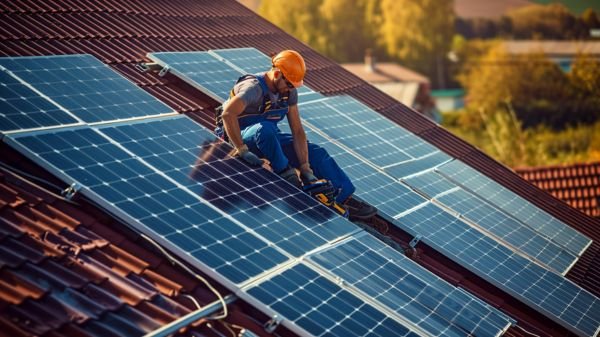
Achieving true energy independence is a dream for many, and the journey often begins with seriously considering off-grid solar power. When it comes to designing and installing off-grid systems, you’re not just buying equipment; you're investing in self-sufficiency, resilience, and a smaller carbon footprint. This guide is your trusted companion, walking you through every crucial step, from calculating your power needs to safely setting up your own standalone energy haven.
It’s a big undertaking, but with the right knowledge, planning, and perhaps a bit of professional help, you can transform a remote property, an RV, or even a suburban home into a beacon of sustainable power.
At a Glance: Your Off-Grid Journey
- Energy Independence: Off-grid systems provide complete self-sufficiency from the utility grid.
- Key Components: You'll need solar panels, a charge controller, a battery bank, and an inverter.
- DIY vs. Pro: Smaller systems are DIY-friendly with basic electrical skills; larger or more complex setups often benefit from professional installation for safety and code compliance.
- Critical First Step: Accurately calculate your daily energy consumption (kWh) to size components correctly.
- Battery Choice Matters: Lithium iron phosphate (LiFePO₄) batteries are the gold standard for longevity and performance, despite higher upfront costs.
- Efficiency is Key: Modern monocrystalline solar panels (20-24% efficient) and MPPT charge controllers (95-99% efficient) maximize energy harvest.
- Safety First: Adhere to electrical codes, wear protective gear, and understand wiring before starting.
- Ongoing Care: Regular cleaning and monitoring keep your system running optimally for years.
Why Embrace Off-Grid Living? More Than Just Energy
An off-grid solar system isn't just about disconnecting from the utility company; it's about reclaiming control over your energy future. Imagine never seeing another electricity bill, powering your home during a blackout, or setting up a thriving homestead far from existing power lines.
These systems are perfect for:
- Remote Properties: Cabins, farms, or homes where grid extension costs are prohibitive.
- Mobile Applications: RVs, tiny homes on wheels, or marine vessels seeking freedom to roam.
- Emergency Preparedness: A reliable power source when the grid inevitably falters.
- Energy Independence Advocates: Those who simply want full control over their power production and consumption.
- Environmental Stewardship: Significantly reducing your reliance on fossil fuels and lowering your carbon footprint.
While the upfront investment can seem substantial, the long-term benefits – both financial and environmental – often outweigh the initial cost. Plus, with advancements in technology, off-grid systems are more efficient and user-friendly than ever before.
Should You DIY or Call a Pro? Balancing Ambition with Expertise
The idea of installing your own off-grid solar system is enticing, promising significant cost savings and a deep understanding of your home's power infrastructure. For smaller setups, like powering an RV, a modest cabin, or a shed, it’s absolutely doable for anyone with basic electrical knowledge and a commitment to safety. You'll save 40-60% on total costs by going the DIY route.
However, as systems grow in complexity – think a whole-home solution with multiple circuits and significant power demands – the risks and challenges escalate. Mistakes can lead to system inefficiencies, component damage, or, most critically, serious electrical hazards. For instance, incorrect wiring can cause fires or electrocution.
Many find a sweet spot in a hybrid approach: planning your system, researching components, and even sourcing them yourself, then bringing in a licensed professional for the trickier parts like wiring the main electrical panel, ensuring code compliance, and final system commissioning. This approach allows you to save money while guaranteeing safety and proper integration. Products like EcoFlow's plug-and-play solutions also simplify the process, making DIY more accessible for those hesitant about complex wiring.
Keep in mind that professional installation may also be a requirement to qualify for certain financial incentives, such as the robust 30% federal solar tax credit (currently scheduled through 2032, though always subject to change).
The Four Pillars of Your Off-Grid System
Before we dive into the nitty-gritty, let's understand the core components that make an off-grid solar system tick:
- Solar Panels: These are the workhorses, capturing sunlight and converting it into direct current (DC) electricity.
- Charge Controller: A crucial regulator, it manages the power flow from your solar panels to your batteries, preventing overcharging and optimizing battery life.
- Battery Bank: Your energy reservoir. This stores the DC electricity generated by your panels so you have power available when the sun isn't shining.
- Inverter: The transformer. It takes the DC power from your batteries and converts it into alternating current (AC) electricity, which is what most household appliances use.
Each component plays a vital role, and selecting the right size and type for your specific needs is paramount to a successful and reliable system.
Designing Your Off-Grid System: A Step-by-Step Blueprint
Successful off-grid system design starts with a clear understanding of your energy needs and environment, then meticulously matching components to those requirements.
Step 1: Calculate Your Power Load – Know Thyself (and Your Appliances)
This is the most critical first step. Undersizing your system will leave you in the dark; oversizing wastes money. You need to determine your daily energy consumption in kilowatt-hours (kWh).
Here's how:
- List Every Appliance: Go through your home, RV, or cabin and list every single electrical device you plan to power. Don't forget those phantom loads!
- Find the Wattage: For each appliance, note its wattage (W). This is usually on a label, in the owner's manual, or easily found online.
- Estimate Daily Use: For each item, estimate how many hours you use it per day. Be realistic – err on the side of slightly higher usage.
- Calculate Daily Watt-Hours (Wh) per Appliance: Multiply Wattage × Daily Use Hours.
- Sum Them Up: Add up the daily Watt-hours for all your appliances to get your total daily Wh.
- Add a Safety Margin: Crucially, add a 20% safety margin to your total daily Wh. This accounts for unforeseen usage, less-than-perfect weather, and future additions.
Example:
- LED Lights (50W) × 6 hours/day = 300 Wh
- Refrigerator (150W) × 8 hours/day (compressor run time) = 1200 Wh
- Laptop (60W) × 4 hours/day = 240 Wh
- Microwave (1000W) × 0.1 hours/day (6 minutes) = 100 Wh
- Total Estimated Daily Wh = 300 + 1200 + 240 + 100 = 1840 Wh
- With 20% Safety Margin: 1840 Wh × 1.20 = 2208 Wh.
This is your target daily energy need.
Step 2: Choosing Your Battery Bank – Your Power Vault
Your battery bank stores the energy captured by your solar panels, ensuring you have power during the night or on cloudy days. This is often the most expensive component, so choose wisely.
Lithium Iron Phosphate (LiFePO₄) batteries are the undisputed champions for off-grid systems, and for good reason:
- Longevity: Expect 10-15 years (6,000-8,000 cycles), far outlasting lead-acid options.
- Depth of Discharge (DOD): Safely use 90-95% of their capacity without harming battery life, compared to 50% for lead-acid. This means you need less actual capacity.
- Efficiency: Highly efficient charge and discharge cycles.
- Maintenance-Free: No watering or ventilation concerns like flooded lead-acid.
- Safety: Much safer chemistry than other lithium types.
- Weight: Significantly lighter than lead-acid for the same usable capacity.
While LiFePO₄ batteries have a higher upfront cost ($300-500 per kWh vs. $150-250 for lead-acid), their extended lifespan and superior performance make them more cost-effective in the long run. The market saw a 20% price drop in LiFePO₄ batteries in 2024, making them even more attractive.
Sizing Your Battery Bank:
Your battery bank needs to meet your daily demand (from Step 1) and provide enough backup for "days of autonomy" – how long you can run without solar input. - Basic Formula:
Battery Capacity (Ah) = (Daily Energy Need (Wh) ÷ System Voltage (V)) × Days of Autonomy ÷ Depth of Discharge (DOD) - Example (using 2208 Wh daily need, 12V system, 2 days autonomy, 90% DOD for LiFePO₄):
Battery Capacity (Ah) = (2208 Wh ÷ 12V) × 2 days ÷ 0.90= 184 Ah × 2 ÷ 0.90= 368 Ah ÷ 0.90 = 409 Ah
You would need a battery bank with at least 409 Amp-hours at 12V. - Autonomy: Aim for 1-2 days of backup. In areas with prolonged cloudy periods or cold climates (which can reduce battery efficiency by 25%), consider 3-5 days.
| Battery Type | Lifespan (Cycles) | Usable DOD | Maintenance | Upfront Cost (per kWh) | Pros | Cons |
| :----------- | :----------------- | :--------- | :---------- | :----------------------- | :--- | :--- |
| LiFePO₄ | 6,000-8,000 | 90-95% | None | $300-500 | Longest lifespan, high DOD, no maintenance, lighter, efficient | Highest upfront cost |
| Flooded LA | 1,000-3,000 | 50% | High | $150-250 | Lowest upfront cost | Short lifespan, low DOD, high maintenance, heavy, needs ventilation |
| AGM (Sealed) | 1,000-3,000 | 50% | Low | $200-350 | Sealed, low maintenance, spill-proof | Shorter lifespan, lower DOD than LiFePO₄, heavier |
| Gel (Sealed) | 1,000-3,000 | 50% | Low | $250-400 | Good for deep discharge (slowly), sealed | Slower charging, lower current output, heavier |
Recommendation: For serious off-grid use, invest in LiFePO₄ batteries like those from Battle Born or EG4 Batteries for peace of mind and long-term value.
Step 3: Calculating Your Solar Panels – Harnessing the Sun
Once you know your daily energy needs and battery capacity, you can determine how many solar panels you need to recharge your batteries and power your home. This depends heavily on your location's "peak sun hours."
- Peak Sun Hours: This isn't just how many hours the sun is out; it's the equivalent number of hours per day when solar irradiance averages 1,000 watts per square meter. You can find this data from resources like the National Renewable Energy Laboratory (NREL) or local weather stations. It varies significantly by season and region (e.g., 3-7 hours). Winter production can drop 50-70% in many regions.
- System Efficiency: Account for losses from wiring, temperature, and inverter inefficiencies. A typical system efficiency is around 85%.
- Basic Formula for Solar Array Size (Watts):
Solar Array Size (W) = Daily Energy Need (Wh) ÷ Peak Sun Hours (hours) ÷ System Efficiency (%) - Example (using 2208 Wh daily need, 5 peak sun hours, 85% system efficiency):
Solar Array Size (W) = 2208 Wh ÷ 5 hours ÷ 0.85= 441.6 Wh/hour ÷ 0.85 = 519.5 Watts
You would need approximately 520 Watts of solar panels. If you chose 300W panels, you’d need two panels (600W total).
Panel Types: - Monocrystalline Panels: These are the most efficient (20-24%) and durable, offering the best performance in limited space. They have a sleek, uniform appearance and a long lifespan (25-30 years). Recommended for most off-grid applications.
- Polycrystalline Panels: Slightly less efficient (15-20%) and typically more affordable. They work well if you have ample roof space.
- Thin-Film Panels: The least efficient (10-12%) and shortest lifespan, but they are flexible and can be a good low-cost option for niche uses or small, portable setups.
| Panel Type | Efficiency | Lifespan | Cost (per watt) | Pros | Cons |
| :-------------- | :--------- | :--------- | :-------------- | :----------------------------------- | :--------------------------------------- |
| Monocrystalline | 20-24% | 25-30 yrs | Higher | Highest efficiency, best for limited space, durable | Higher upfront cost |
| Polycrystalline | 15-20% | 20-25 yrs | Medium | More affordable, good for ample space | Lower efficiency, larger footprint |
| Thin-Film | 10-12% | 15-20 yrs | Lowest | Flexible, lightweight, performs well in low light | Lowest efficiency, largest footprint for given output, shortest lifespan |
Consider brands like Canadian Solar, JA Solar, or Trina Solar for reliable solar panels. For a comprehensive understanding of how such systems generate power, you might want to learn about natures generator and other foundational energy principles.
Step 4: Getting a Charge Controller – Your Battery's Best Friend
The charge controller is often underestimated but vital. It's the brain between your panels and your batteries, ensuring your batteries are charged safely and efficiently without overcharging.
Two main types dominate the market:
- Maximum Power Point Tracking (MPPT) Controllers:
- Efficiency: 95-99% efficient.
- Features: Smarter, more sophisticated. They constantly track the optimal voltage and current from your solar panels to extract the maximum available power, especially beneficial in variable weather conditions (cloudy days, changing temperatures).
- Cost: Higher ($150-800).
- Recommendation: Highly recommended for systems over 200W or those needing maximum performance. They can harvest 20-30% more power than PWM controllers.
- Pulse Width Modulation (PWM) Controllers:
- Efficiency: 75-80% efficient.
- Features: Simpler, less expensive. They essentially act as a switch, connecting and disconnecting the panels to the battery in pulses to regulate charging.
- Cost: Lower ($50-150).
- Recommendation: Suitable for very small, basic systems (under 200W) where cost is the primary concern and efficiency isn't critical.
Modern MPPT controllers are now standard with 95-99% efficiency, offering superior harvest and flexibility for panel configurations.
| Controller Type | Efficiency | Cost | Best For | Pros | Cons |
| :-------------- | :--------- | :-------------- | :------------------------------------------- | :----------------------------------------- | :------------------------------------------- |
| MPPT | 95-99% | $150-800 | Systems >200W, variable weather, maximizing power | Higher energy harvest, more flexible stringing, better for larger systems | Higher upfront cost |
| PWM | 75-80% | $50-150 | Small systems <200W, simple setups, low budget | Lower upfront cost, simpler technology | Lower energy harvest, less flexible, only suitable for small systems |
Step 5: Finding Your Inverter – From DC to AC
The inverter is the bridge between your battery's DC power and the AC power that most of your appliances use.
- Sizing: Your inverter's continuous output wattage must meet or exceed your expected AC load. Pay close attention to "surge" or "peak" wattage, which is the temporary power spike required by appliances with motors (like refrigerators, pumps) when they start up.
- Pure Sine Wave Inverters:
- Output: Produces clean, smooth AC power, identical to (or even better than) what you get from the grid.
- Compatibility: Essential for sensitive electronics (computers, medical equipment), motors, and anything with a clock or digital timer.
- Efficiency: 90-95%.
- Recommendation: Always recommended for off-grid systems to prevent damage to appliances and ensure reliable operation.
- Modified Sine Wave Inverters:
- Output: Produces a "stepped" approximation of a sine wave.
- Compatibility: Can cause issues with sensitive electronics, introduce humming in audio equipment, and make motors run hotter or less efficiently.
- Efficiency: 85-90%.
- Recommendation: Only for very basic, non-sensitive loads (e.g., simple resistive heaters, incandescent lights) where cost is the absolute priority.
| Inverter Type | Output Waveform | Efficiency | Cost | Best For | Pros | Cons |
| :----------------- | :-------------- | :--------- | :-------------- | :----------------------------------------------- | :--------------------------------- | :----------------------------------------------------------- |
| Pure Sine Wave | Clean AC | 90-95% | $200-2,000+ | All electronics, motors, medical devices, sensitive loads | Clean, stable power; universally compatible | Higher upfront cost |
| Modified Sine Wave | Stepped AC | 85-90% | $50-500 | Basic resistive loads, incandescent lights | Lower upfront cost | Can damage sensitive electronics, cause humming/heat in motors, less efficient |
Look for inverters from reputable brands like Victron Energy, Magnum Energy, or Sol-Ark for reliability and advanced features.
System Sizing Formulas At a Glance:
- Daily Energy Need (Wh): Σ(Device Wattage × Hours of Use) + 20% safety margin.
- Battery Capacity (Ah): (Daily Energy Need ÷ System Voltage) × Days of Autonomy ÷ Depth of Discharge.
- Solar Array Size (W): Daily Energy Need ÷ Peak Sun Hours ÷ System Efficiency.
Cost Considerations: What to Expect in 2025
The cost of designing and installing off-grid systems varies significantly based on your energy needs, component choices, and whether you DIY or hire professionals. However, with market trends like falling lithium battery prices and increasing panel efficiency, off-grid systems are becoming more accessible.
General Cost Estimates (2025, including potential 30% federal tax credit):
- Small Cabin/RV (2-5kW system): $5,600 - $14,300
- Enough for basic lighting, charging, small fridge, and water pump.
- Medium Home (8-12kW system): $21,800 - $34,500
- Can power typical household appliances, HVAC (limited), and entertainment.
- Large Homestead (15-25kW system): $43,000 - $73,500
- Suitable for larger homes with heavy appliance use, workshops, or electric vehicle charging.
Key Cost Factors: - DIY Savings: As mentioned, doing it yourself can save 40-60% on total costs, but requires significant time, research, and electrical expertise.
- Battery Chemistry: LiFePO₄ batteries, while more expensive upfront, offer superior long-term value due to their extended lifespan (6,000-8,000 cycles vs. 1,500-3,000 for lead-acid) and higher usable capacity.
- Modular Systems: Brands like EcoFlow offer modular, expandable systems that allow you to start small and add capacity as your budget or needs grow, helping to spread the initial investment.
2025 Market Trends: A Brighter Future for Off-Grid
The landscape of off-grid solar is continually evolving, and 2025 brings exciting trends that benefit consumers:
- Lithium Battery Price Drops: LiFePO₄ battery prices decreased by 20% in 2024, making this superior technology more attainable. Their long life and deep discharge capabilities mean fewer replacements and more reliable power.
- Higher Efficiency Panels: Monocrystalline panels commonly reach 20-24% efficiency, meaning more power from less space.
- Improved MPPT Controllers: Standard MPPT controllers now boast 95-99% efficiency, maximizing the energy you harvest from your panels.
- Modular Design Trends: Systems are increasingly designed to be modular and expandable, allowing you to scale your system as your needs and budget evolve.
- Enhanced Monitoring: Real-time smartphone apps offer detailed insights into your system's performance, battery state of charge, and energy consumption, empowering you to optimize usage and catch issues early.
These trends collectively make designing and installing off-grid systems more efficient, cost-effective, and user-friendly than ever before.
Installing Your Off-Grid System: Safety and Compliance
Once you've meticulously designed your system and gathered all your components, the installation phase begins. This is where meticulous planning and unwavering adherence to safety protocols are paramount.
Site Assessment: The Foundation of Success
Before a single panel is mounted, conduct a thorough site assessment:
- Available Space: Identify optimal locations for solar panels (roof, ground mount), considering structural integrity and accessibility.
- Shading Analysis: Map out any potential shading from trees, chimneys, or neighboring buildings throughout the day and across seasons. Even partial shading can drastically reduce panel output.
- Optimal Orientation & Tilt: For the Northern Hemisphere, panels typically face south for maximum sun exposure. The tilt angle should optimize for year-round production or specifically for winter if that's when your energy needs are highest.
- Existing Electrical Infrastructure: Understand your current wiring, main service panel, and any existing grounding systems if integrating with a structure.
- Battery & Inverter Location: Choose a cool, dry, well-ventilated space for your batteries and inverter, protected from extreme temperatures.
Permitting and Code Compliance: Don't Skip This Step
Permitting requirements vary significantly by location (city, county, state). Before you start, contact your local building and electrical departments to understand what permits are needed for electrical, building, and structural work.
Adherence to the National Electrical Code (NEC) is crucial for safety and legality:
- NEC 2023 Updates: Be aware of the latest code requirements, which may include:
- Rapid Shutdown: Systems must have a way to quickly de-energize panels for firefighter safety.
- AFCI (Arc-Fault Circuit Interrupters) Protection: Required for DC circuits to prevent electrical fires.
- Grounding: Proper grounding of all components is essential for safety.
- Battery Ventilation: Especially for certain battery types, ensuring adequate ventilation to prevent gas buildup.
- Labeling: Clear labeling of disconnects and electrical components.
Failing to comply with local codes and the NEC can result in fines, system shutdown, insurance issues, and, most importantly, create hazardous conditions.
Essential Safety Practices: Your Well-Being Comes First
Working with electricity, especially high-voltage DC from solar panels and batteries, is inherently dangerous.
- Personal Protective Equipment (PPE): Always wear insulated gloves, safety glasses, hard hats (if working on roofs), and non-slip footwear.
- De-Energize Systems: Never work on live electrical components. Always disconnect batteries and panels before making connections or performing maintenance.
- Proper Tools: Use insulated tools specifically designed for electrical work.
- Wiring Diagrams: Follow your wiring diagrams meticulously. Double-check every connection.
- Battery Safety: Handle batteries with care. Avoid short circuits, ensure proper ventilation (especially for lead-acid), and wear eye protection when working with battery terminals.
- Working at Heights: Use proper fall protection when working on roofs.
If you have any doubts about your ability to perform an installation safely, hire a qualified and licensed electrician or solar installer.
Keeping the Lights On: Essential Maintenance Tips
An off-grid system is an investment, and like any valuable asset, it requires proper care to perform reliably for years to come. Routine maintenance is generally straightforward but essential.
- Clean Solar Panels Regularly: Dirt, dust, pollen, leaves, and even bird droppings can significantly reduce panel efficiency. Clean them with water and a soft brush or squeegee, especially after dry spells or heavy winds.
- Inspect Wiring and Connections: Periodically check all wiring for signs of wear, fraying, or damage. Ensure all connections (to panels, charge controller, batteries, inverter) are tight and free of rust or corrosion. Loose connections can lead to power loss or fire hazards.
- Monitor Battery Health: Use your system's monitoring app or a multimeter to track voltage, charge levels, and discharge patterns. LiFePO₄ batteries generally require little active maintenance, but monitoring helps identify issues early.
- Check Inverter and Charge Controller: Look for any warning lights, error codes, or unusual noises. Ensure proper ventilation around these components to prevent overheating. Keep vents clear of dust and debris.
- Track Performance: Utilize monitoring apps (a common feature in 2025 systems) to keep an eye on your system's daily energy production and consumption. This helps you catch inefficiencies, optimize your energy usage, and understand if a component isn't performing as expected.
- Protect Against Extreme Weather: Install appropriate surge protection for lightning strikes. Ensure all outdoor components are housed in waterproof enclosures. Secure panels properly to withstand high winds and heavy snow loads.
- Test Backup Loads: Periodically, simulate a grid-outage scenario (if applicable) or simply run your essential appliances from battery power to ensure your system can handle the load and that your backup capacity is sufficient.
- Update Firmware: For smart inverters and charge controllers, regularly check for and install firmware updates. These can improve performance, add new features, enhance security, and ensure compatibility.
By following these simple steps, you can ensure your off-grid system remains a reliable and efficient source of power for its entire lifespan.
Your Next Steps: Building Your Energy Future
Designing and installing off-grid systems is a journey toward unparalleled energy independence. It demands careful planning, a solid understanding of the components, and a commitment to safety and quality.
You now have a robust framework: from calculating your power load and choosing the right batteries, panels, charge controller, and inverter, to understanding costs, market trends, and essential maintenance. Remember, the investment of time and resources now will pay dividends in reliable power and peace of mind for decades.
Whether you decide to tackle the entire installation yourself, opt for a hybrid approach, or enlist the help of certified professionals, the knowledge you've gained here will empower you to make informed decisions and build an off-grid system that truly serves your needs. Your journey to sustainable, self-sufficient power starts now.